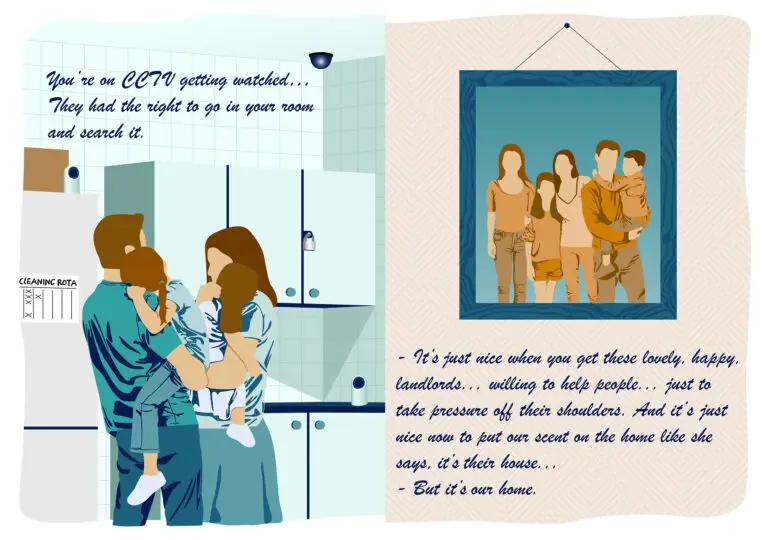
“We’ve got an 11-year-old boy, a two-year-old boy, and then a newborn girl in one room together for possibly three years. So I said, no, let’s just move near your parents, get a three-bedroom house in private rented.”
The property they moved to was the only house they viewed. It met all the family’s needs, was in good condition and close to schools and family. Although the couple separated, the family settled well in their new location, with the older children attending local schools and taking part in community activities like football. Although they only personalised the property to a limited extent, and despite the nagging sense of insecurity, it felt like home.
“It definitely did feel like home. Always in the back of my mind, I know it isn’t, but we were paying for that service for it to be.”
Without warning, a Section 21 notice arrived via email, requiring the family to vacate within two months, causing significant distress. The estate agent was unaware of the reason and suggested it could be due to the landlord’s age, potential care needs, or the anticipated impact of the Renters Rights Bill. Advice was sought from Shelter and the local Council’s homeless prevention team. The family’s preference is to return to secure social housing, even if it means temporary accommodation in the short-term or relocation.
“I don’t think I would ever, ever think about another private rental… the stress is just too much to cope with.”
In the seven years that the family have been in their private rental, rents for a three-bedroom house in the area have doubled to around £1,400 per month.
Although council staff have done their best to be helpful, the process is frustrating, precarious, and unsettling. The council advised not to leave voluntarily and although the family have been placed in the second highest housing need category, this has not been enough so far for bids on properties to be successful.
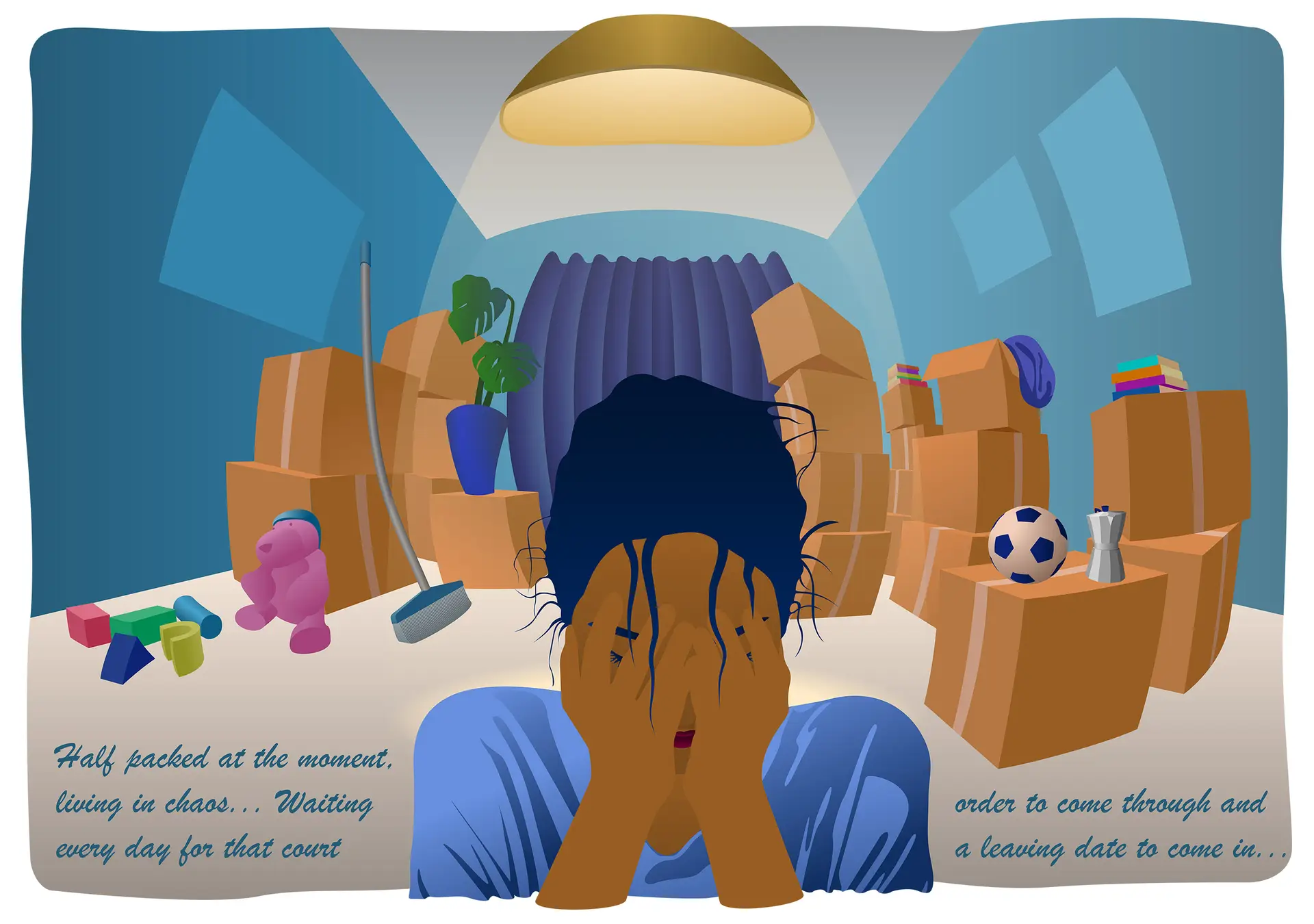
“I’d be making myself intentionally homeless … I’ve got to wait for a court order and the bailiffs to physically remove us.”
The eviction process has severely impacted the woman’s mental health, something that had not been a previous concern despite a very high-pressure job.
“I went to the doctor’s and just said, you know, I’m so stressed. It’s been 5 weeks, I haven’t heard anything … so antidepressants … helps me sleep at night, so I’m not laying there churning over everything”.
Their eldest child also struggled emotionally.
“He’s found the whole thing really unfair and unjust … He’s definitely lashed out more than I’ve seen him since he was a toddler.”
After hearing little for several months, the woman was notified that the Section 21 notice had been served incorrectly and must be re-served. The possibility of the family moving on to the next stage of their lives has moved further away again. The family continues to live with the stress and anxiety of living in a house but not having a home.