“When I got there, none of the fittings and fixtures worked … the shower doesn’t work … I passed out last week from heat stroke and I needed a cold shower. And I couldn’t have one.”
“The surveyor said it needs an electrical survey straight away because the electrical wiring in the kitchen is illegal.”
The poor housing conditions affected both her physical and mental health.
“I had a breakdown after I moved. I just collapsed about a couple of months in … I suddenly couldn’t walk. I have ME … and now I’ve got arthritis.”
The stress of uncertainty and lack of control over her living situation compounded her health challenges.
“I just sort of feel I’ve been on this knife edge … I’m quite a strong person. And yet I’ve gone down to being this person who can’t cope. And it’s scary, do you know? I don’t want to end my life like this. Battling with beetles and ants and damp.”
She felt a power imbalance with her landlord that contrasted with past experiences.
“I get this huge impression about, you know, he’s the rich farmer, and I’m one of the lower orders … everything in the house is grotty because it doesn’t matter. It’s only a tenant.”
She feared retaliation though if she complained.
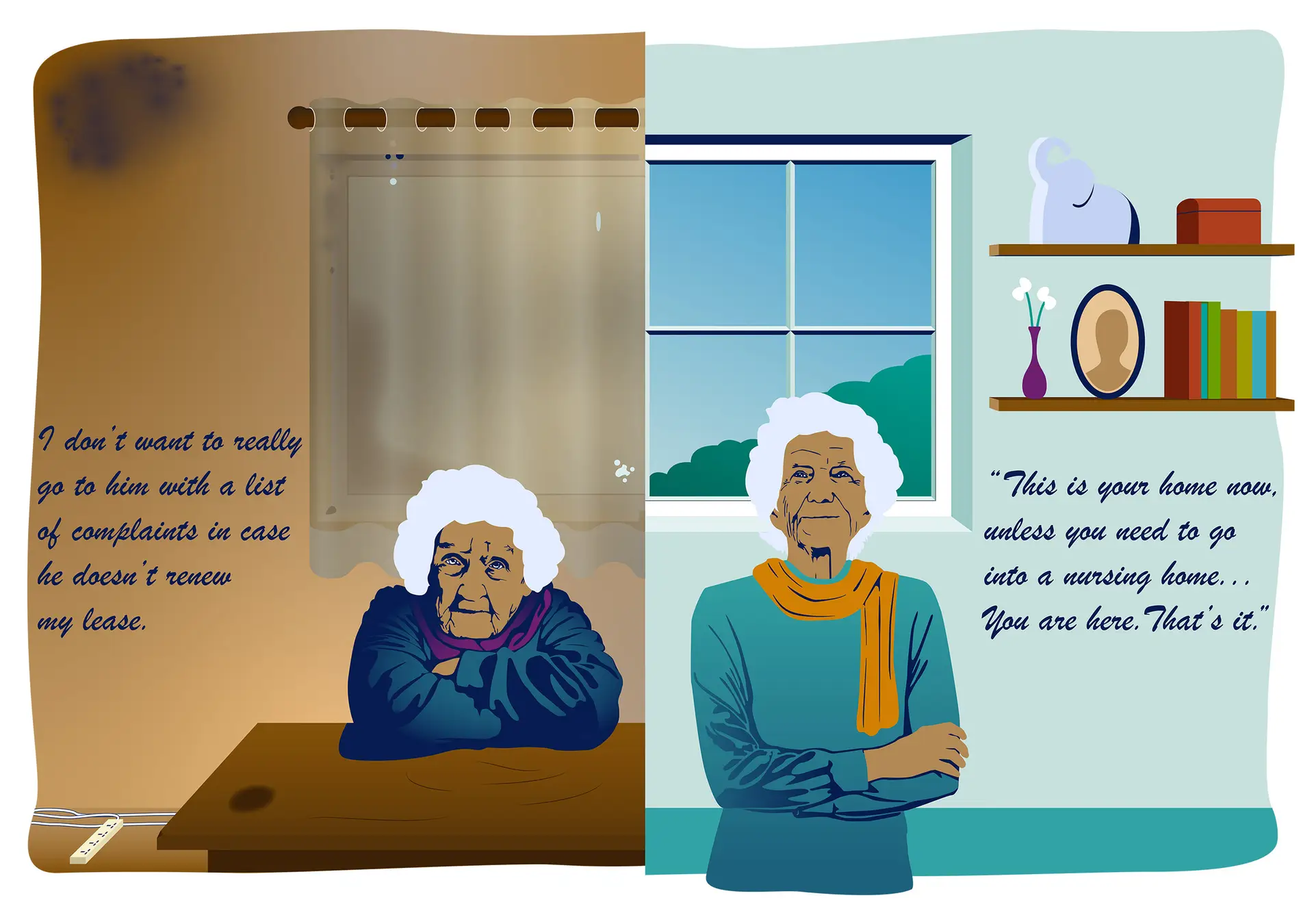
“I thought, I don’t want to really go to him with a list of complaints in case he doesn’t renew my lease.”
She considered enquiring about social housing but was discouraged by the local council’s website, as well as finding it difficult to talk to others about the problems she has faced.
“They said, if your house is damp, that is not a valid reason to go for social housing because it’s a landlord’s responsibility … if you become immobile and can’t go up the stairs … it’s your landlord’s responsibility”
“The thought of going to meet somebody to talk with is quite stressful in itself.”
The involvement of Safe Suffolk Renters offered hope.
“Suffolk Renters sent me this pack through the post and I thought, gosh, this is … just an answer to a prayer.”
However, she was anxious about the disruption repairs might cause.
“How do I live in the house when walls, plaster’s got to be taken off … and I’m still living in that mess?”
The Safe Suffolk Renters team gave the property a Grade 1 hazard rating, indicating serious health risks. It was clear that it was not in the tenant’s best interests to confront the landlord, even with support, so the team looked at alternatives, becoming aware of vacancies at local almshouses. After being interviewed at one of them, the trustees recognised the urgent need and offered a flat, providing a secure and stable home environment.
Repeated, unwanted contact was received from the landlord after giving notice and she understands that the landlord tried to re-let the property without addressing the issues. Despite this, her health and wellbeing have shown signs of improvement, with stress significantly reduced through a sense of safety and permanence. The almshouse offers an attractive setting, with interesting architecture and gardens, suiting her sense of identity, and she has been able to personalise her space. There are communal facilities and social opportunities, and the flexibility to remain private and independent. She has begun to re-engage with physical activity, including tending to an allotment, and felt hopeful about her recovery.
“I just say thank you every day.”
“I took an allotment on at the same time. I was so lucky with that as well … I’ve tidied my pots … but it absolutely whacks me for six. I can’t do anything for three days. But I bought tomato plants. I bought the grow bags. I’m doing something and hopefully I will get better and be able to do it … once I feel better, I’ll be away”