Relationships

Relationships

There are wide variations in the type of landlord that tenants have, their relationship, and the impact on their lived experience and health and wellbeing.

  • Good relationships with landlords: Tenants valued supportive landlords who respected their homes, sometimes avoiding rent increases and allowing minor repairs. Pre-existing friendships offered security but could create awkwardness over maintenance.
  • Changing landlords: When landlords changed, tenants often felt insecure. New owners sometimes tied necessary improvements to steep rent hikes, eroding trust and stability.
  • Poor relationships with landlords: Dismissive landlords created stress, ignoring repairs and boundaries. Tenants feared eviction or rent hikes, and some faced discrimination and threats when raising housing issues.
  • Relationships with agents: Agents varied widely in responsiveness. Some were professional and helpful, others ignored repairs or acted invasively during inspections, undermining tenants’ sense of home.
  • Relationships with sharers and neighbours: Shared housing required trust among tenants. While some enjoyed supportive neighbours, others faced nuisance, crime, or unsafe conditions, increasing anxiety and insecurity.
  • Finding support: Community networks, family, and local groups provided vital emotional and practical support, helping tenants cope with housing challenges and fostering a sense of belonging.

Security of Tenure: Tenants’ security of tenure varies; trust, pragmatism, and stability aid wellbeing, while landlord changes, Section 21 notices, and precarity fuel anxiety.
Find out more

Identity and home: A sense of home can help tenants thrive, and depends on personalisation, pets, gardens, community, and security; restrictions, instability, and stigma undermine identity and wellbeing.
Find out more

Housing Journeys: Private renting has many types of housing journey; frequent moves and insecurity persist. Life events can trigger downward or upward trajectories, shaping financial strain, wellbeing, and a search for stability.
Find out more

Relationships: Landlords can feel stigmatised and believe recent legislation favours tenants. They emphasise collaborative approaches like education, peer support and initiatives such as Safe Suffolk Renters.
Find out more

From Homelessness to Stability

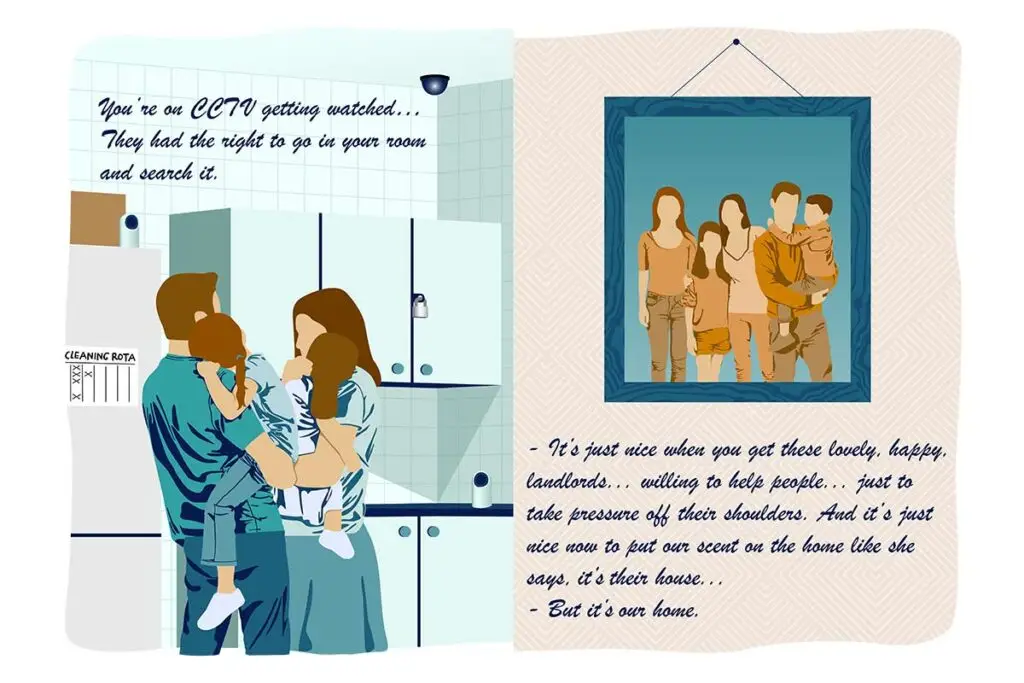
A family with three children were made homeless after being evicted from a caravan park, due to year-round residency restrictions they had not been made aware of. They were placed in emergency housing, describing the experience as traumatic. On top of being crowded into one room, they were subjected to CCTV surveillance and room searches. Their children’s education suffered, and stress-related eczema kept the father off work.

From Homelessness to Stability

Relationships

There are wide variations in the type of landlord that tenants have, their relationship, and the impact on their lived experience and health and wellbeing.

Good relationships with landlords

Positive, often supportive relationships with their landlords were common. Having their landlord tell them ‘It’s my property, but your home’ was often deeply appreciated and reflected their own thoughts on the relationship.

“We’ve got a fantastic landlord at the moment. He bought the property as a pension fund … which is brilliant. We have no issues with him whatsoever. If we need something done, he’ll do it or let me do it, which is something that I quite happily do. I always look at any rental property that I’m in, it’s, it’s their house, but it’s my home” (T50).

Long-standing relationships might result in landlords not increasing rents, or tenants assuming more responsibility for minor repairs. Tenancies sometimes arise from pre-existing personal relationships, potentially offering more security but creating discomfort when addressing repairs or improvements.

“It is tricky … the whole situation at the moment really frustrates me that I’m having to tell her what things should be done … there is definitely a kind of a case where we’re concerned about, not willing to push it too far because it’s a friend and … it would be awkward if we fell out over it” (T55).

A couple of tenants got on well with their landlord, who they did not know before, but felt they may have taken advantage of the good relationship to constantly put off doing repairs and making improvements.

Changing landlords

Problems often occurred when a landlord changed. An older tenant had a long-term and friendly relationship with their landlord but found when a relative took over, they lacked the same care and consideration which made them feel insecure. When a new landlord took over an HMO, they tied the improvements that were needed to substantial rent increases.

Poor relationships with landlords

Others encountered dismissive or unresponsive attitudes from landlords who seemed determined to emphasise their own sense of power and the tenant’s precarity. Tenants could feel looked down upon and stigmatised.

“As a tenant, I feel secondary society. I really do, you know, you’re just regarded as … Just give us your money” (T63).

The most common complaint was a lack of response to repair requests, while some were hesitant to even raise the issue, fearing rent increases or eviction. Concerns were raised about lack of respect for boundaries with unannounced and intrusive visits. In one case, a landlord who had recently taken over a property used threatening and discriminatory language when the tenant raised issues of persistent mould, leaks, broken fixtures, inadequate heating, and pest infestations.

“And he said … You have to live how is the property look like. I will not do no change at all. And then he started to say to her, you are gypsy, and you look like how the other gypsy are” (T66).

Several experiences emphasised the connection between poor housing conditions, low income, social exclusion, and the pronounced power imbalance between some tenants and landlords.

Relationships with agents

Some tenants had little or no contact with their landlords, interacting solely with management agents. Some reported inconsistent levels of service, with a lack of response to repair requests the most frequent complaint and some had no out of hours service, leaving them stranded outside already restricted opening hours. One tenant noticed a wide variation in the service from agents during viewings, with standards increasing in proportion to the cost and quality of the property. Other tenants found their agents professional and responsive, helping them move to more suitable properties, dealing with anti-social neighbours, or responding well to repair requests. While tenants were happy about agents conducting inspections, a few felt they were too frequent, intrusive, or undertaken with a lack of empathy, undermining the notion that the tenant’s property was their home.

“I have to have six monthly reviews, inspections. They take photographs of everything, which I find absolutely invasive” (T63).

Several participants from the Roma community described being registered by agents who then failed to contact them to offer them any viewings. They said that this was a very commonly shared experience within the community.

Relationships with sharers and neighbours

Joint tenants meeting online must build and manage new, trusting relationships, depending on each other’s plans for their security of tenure as well as landlords. Tenants in HMOs often have little choice about who they share with and while some report good relationships, several experienced nuisance or feared for their safety due to another resident’s actions. Many tenants had good relationships with neighbours in their block of flats, some finding great support during times of illness. They appreciate the friendly relations but also the respect for privacy. Others have experienced nuisance due to drug use, criminal behaviour, noise, pets, and lack of cleanliness, sometimes increasing anxiety and feelings of insecurity.

Finding support

Support from family and friends living nearby, or local institutions and networks can be important to give tenants a sense of community. Community cafes, toddler groups, or top-up shops[1] that also give access to advice and support were important for several tenants. Others found support from groups representing different communities and specialist charities.

Tenants

Safe Suffolk Renters’ valuable resources and advice will help you rent your home with confidence.

Case Studies

Our research collected more detailed information on key themes which are illustrated with case studies.

Related Themes

References

[1] University of Suffolk. “Ipswich’s Top Up Shops Delivering Vital Community Support, New Research Finds.” University of Suffolk, December 2, 2024. https://www.uos.ac.uk/about/news/ipswichs-top-up-shops-delivering-vital-community-support-new-research-finds/.