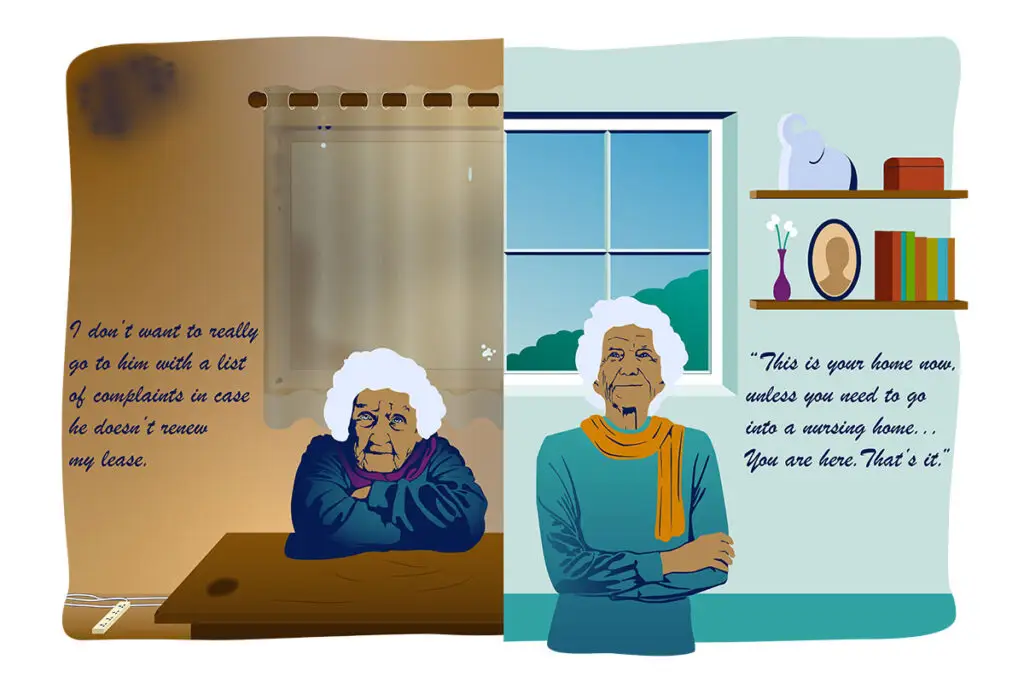
Tenant experiences range from satisfaction with property condition to severe disrepair, damp, and heating issues, often impacting health and well-being.
Property Characteristics: Tenants’ property choices reflect aesthetics, space needs, affordability, and changing circumstances, with challenges including overcrowding, poor conditions, limited choice, landlord restrictions, and accessibility for older or disabled renters.
Find out more
Approaches: Landlords vary in style—some manage everything themselves, others use agents. Many prefer long-term tenants and allow personalisation of homes. Renovations are common, though costly.
Find out more
Housing insecurity and health in older age
In her late seventies, a woman was living in a rural cottage in Suffolk. Her housing journey included homeownership, which ended following a relationship breakdown, time living abroad, and a move to be closer to her daughter. After living a very independent, self-reliant, and very varied life, her housing choices became constrained by financial circumstances. Despite previous positive renting experiences, her situation was increasingly precarious. The cottage had multiple structural and safety issues, including damp, faulty electrics and cooker, and inadequate heating.
Tenants report mixed satisfaction; many face damp, mould, cold homes, and disrepair, causing health and mental strain, with limited landlord accountability.
A good proportion of interviewees reported satisfaction with the condition of their property, with some landlords investing in improvements, at times sharing the cost. Others undertook substantial improvements themselves, such as installing new flooring or kitchen units, and others were happy to carry out minor repairs.
Many others expressed dissatisfaction, with concerns sometimes beginning from the outset. Properties were let in the condition previous tenants left them in – dirty and in poor repair. While individual repairs might be done, some tenants felt the overall condition remained unsatisfactory, or ‘shabby’, citing poor ventilation, outdated appliances, and ill-fitting fixtures and fittings. Tenants will sometimes decide to live with disrepair, with the ideal location of properties or the affordable rent providing some compensation for inconvenience. Substandard housing conditions had become normalised, one tenant identifying an implicit trade-off for a reasonably affordable property in a high rent area.
The standard of the property can make it difficult for tenants to decide who to turn to for help. Although it is in poor condition, they feel it is not bad enough for any formal action through environmental health, while others lack the awareness of services that can directly intervene.
Damp and mould problems are common, and tenants were aware of the importance of taking responsibility themselves to maintain the right balance of heating and ventilation. Often this was because they or one of their family are asthmatic or have other medical conditions.
Others described more serious and persistent damp problems attributed to leaks, structural deficiencies, or inadequate ventilation and heating. More serious damp and mould was linked to physical health concerns such as respiratory problems or auto-immune disease. Others became anxious and depressed, with multiple unresolved repair issues leaving them feeling overwhelmed and exhausted. Examples included poorly hung doors, rotting floorboards, crumbling windowsills, unsafe electrical fittings, insect and rodent infestation. For some, the emotional response was one of shame, contributing to social isolation.
Few tenants had contacted council environmental health teams due to concern about reprisals. Tenants are protected from eviction for six months after an improvement notice is served on a landlord. A tenant who did involve environmental health was served with a section 21 notice shortly after the six months lapsed. Although selling the property was given as a reason, the timing made the tenant feel it may have been a revenge eviction. Contact with the Safe Suffolk Renters team had encouraged some tenants to start the process of asserting their tenancy rights.
Tenants can find rural properties without central heating extremely cold, while urban properties, particularly HMOs, were also reported to have inadequate heating, with some tenants noting that thermostats had been removed.
Our research collected more detailed information on key themes which are illustrated with case studies.
Tenants’ property choices reflect aesthetics, space needs, affordability, and changing circumstances, with challenges including overcrowding, poor conditions, limited choice, landlord restrictions, and accessibility for older or disabled renters.
Landlords vary in style—some manage everything themselves, others use agents. Many prefer long-term tenants and allow personalisation of homes. Renovations are common, though costly.
A sense of home can help tenants thrive, and depends on personalisation, pets, gardens, community, and security; restrictions, instability, and stigma undermine identity and wellbeing.